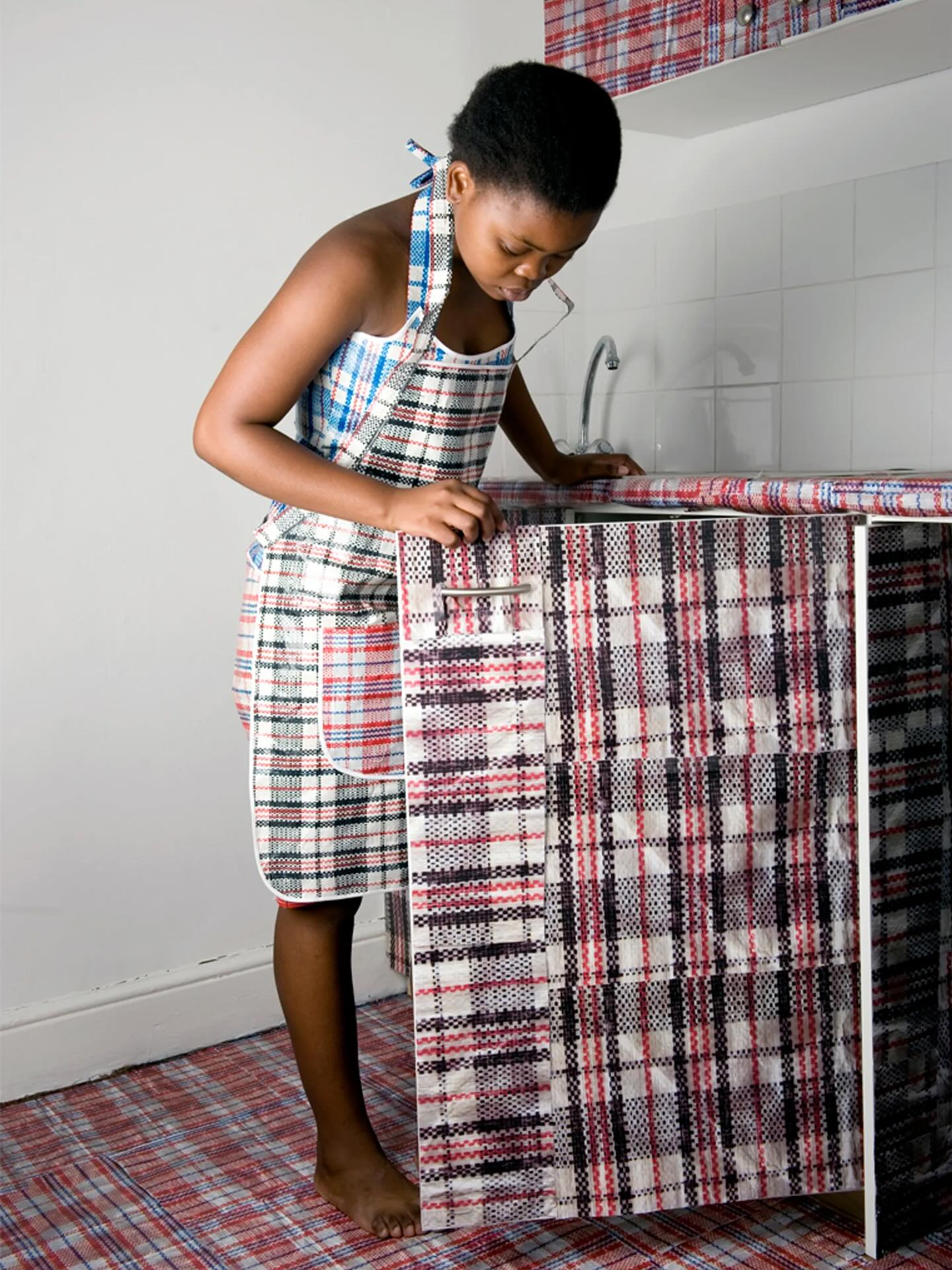
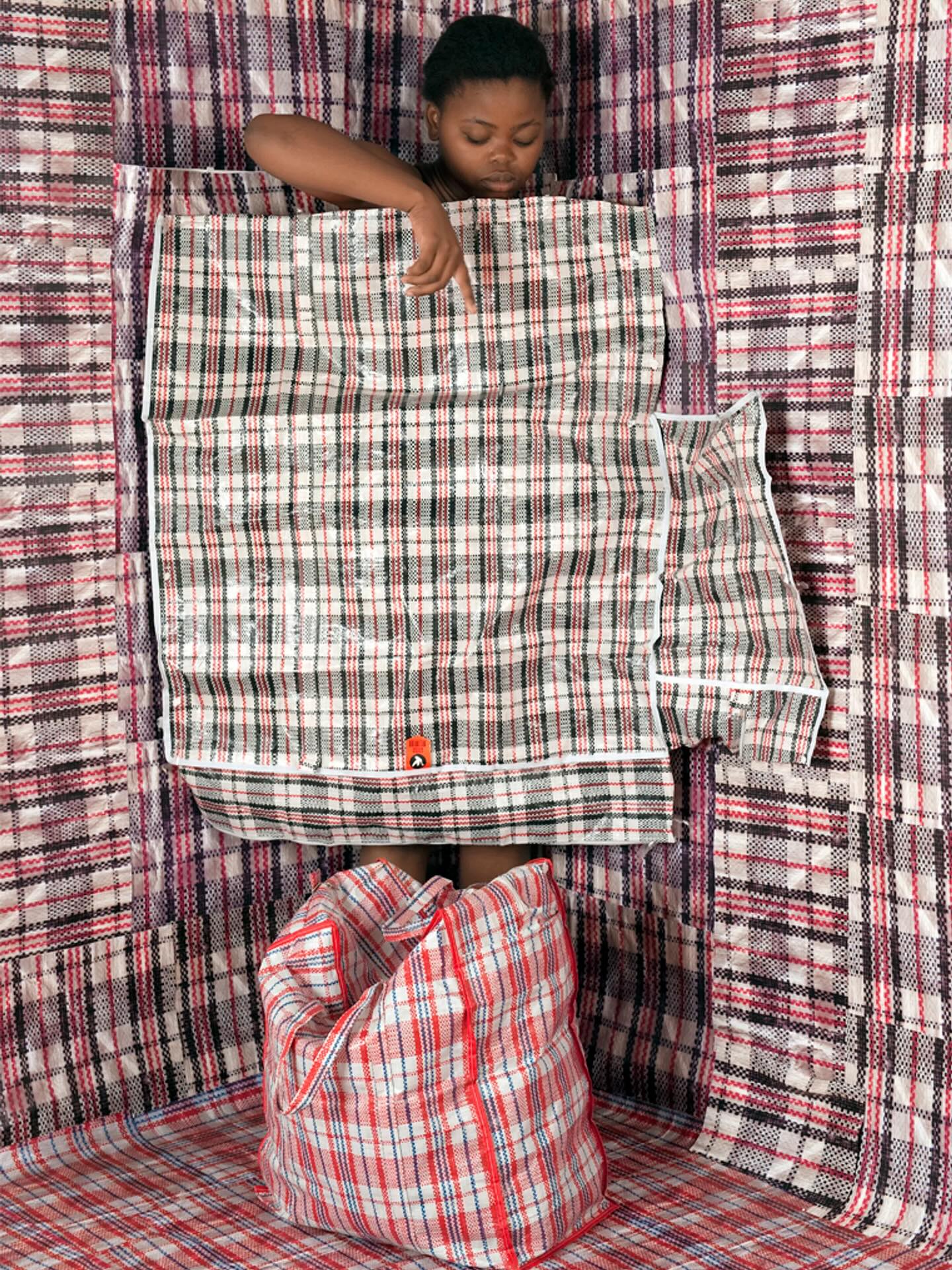
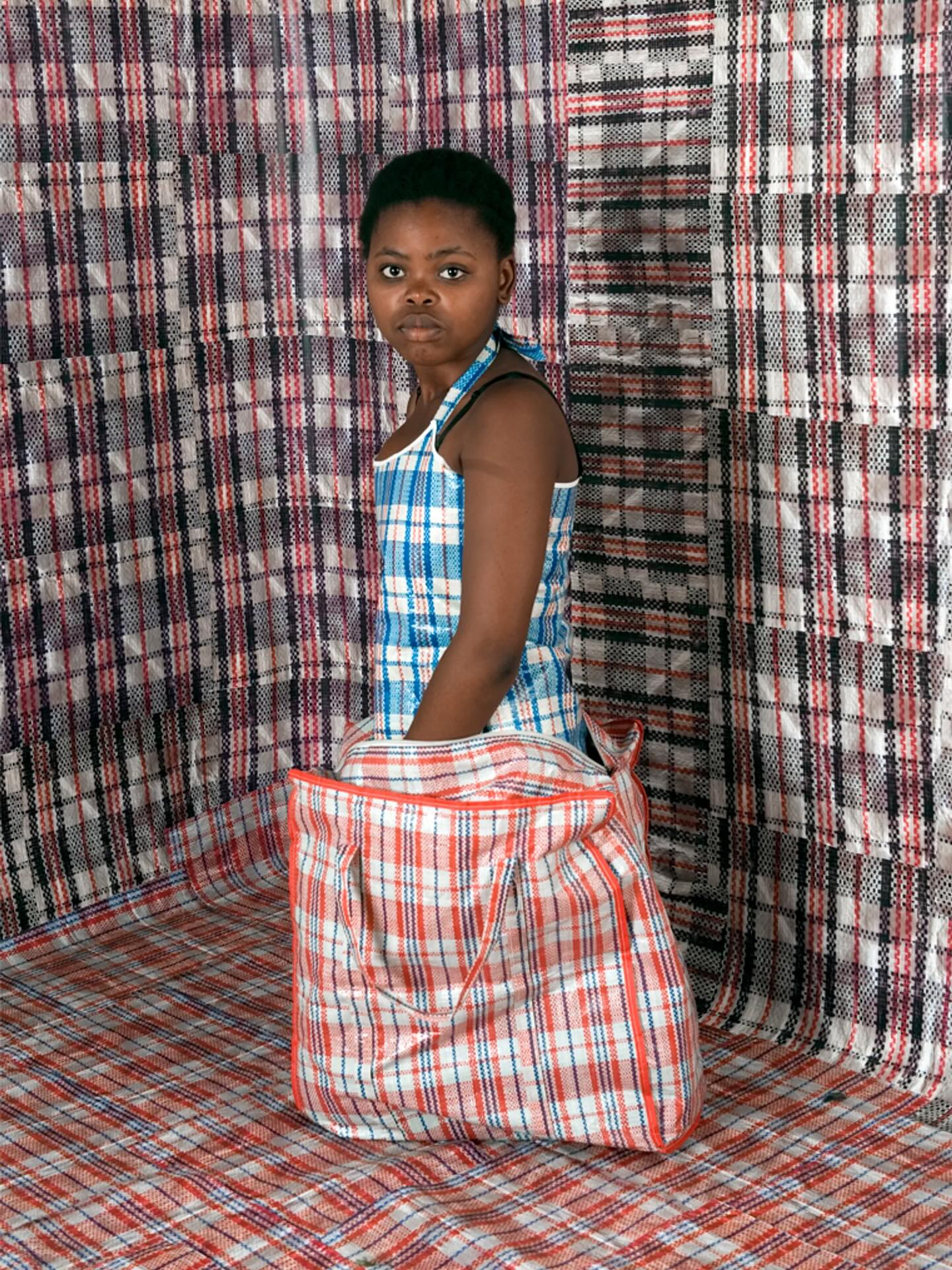
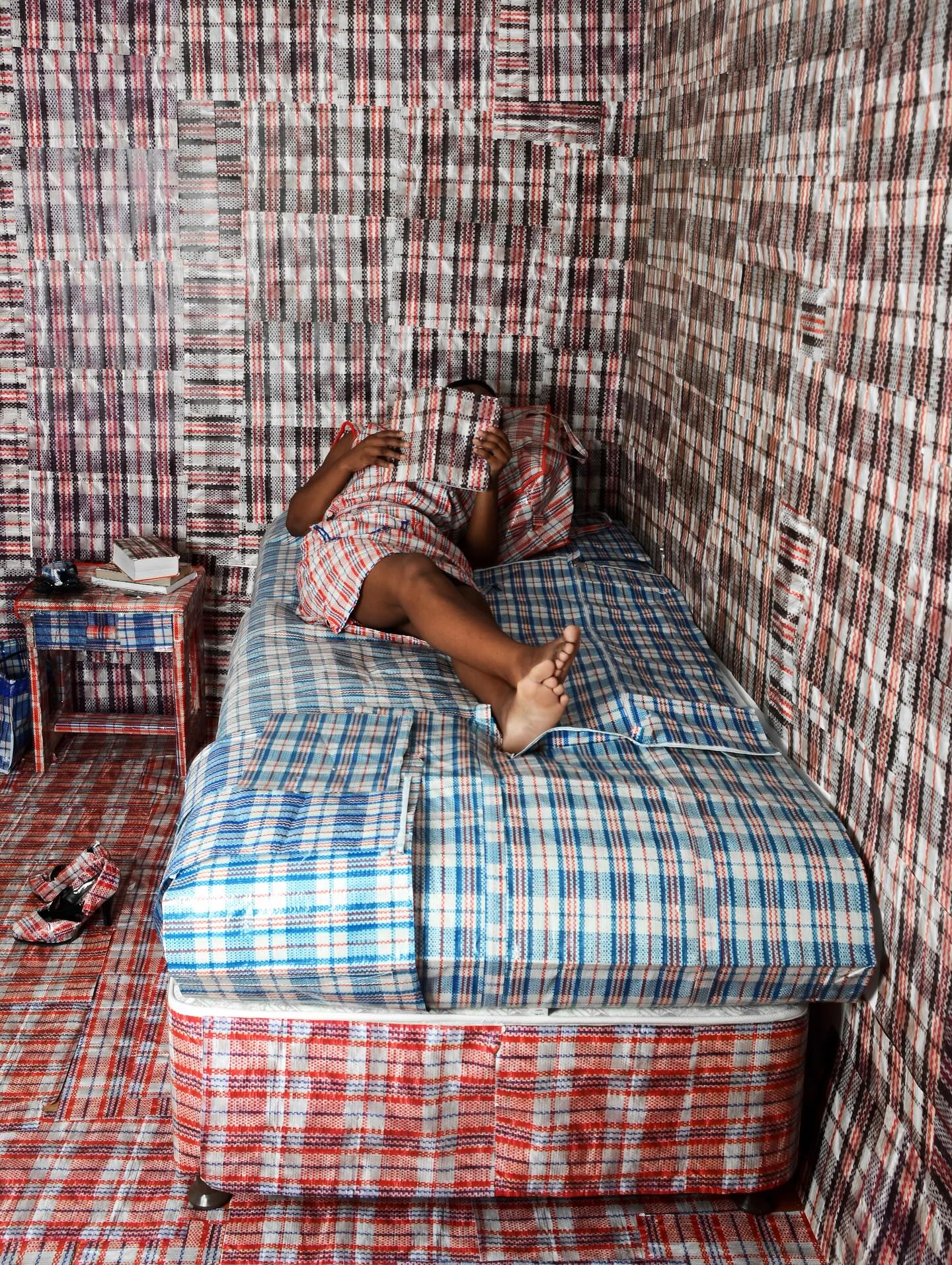
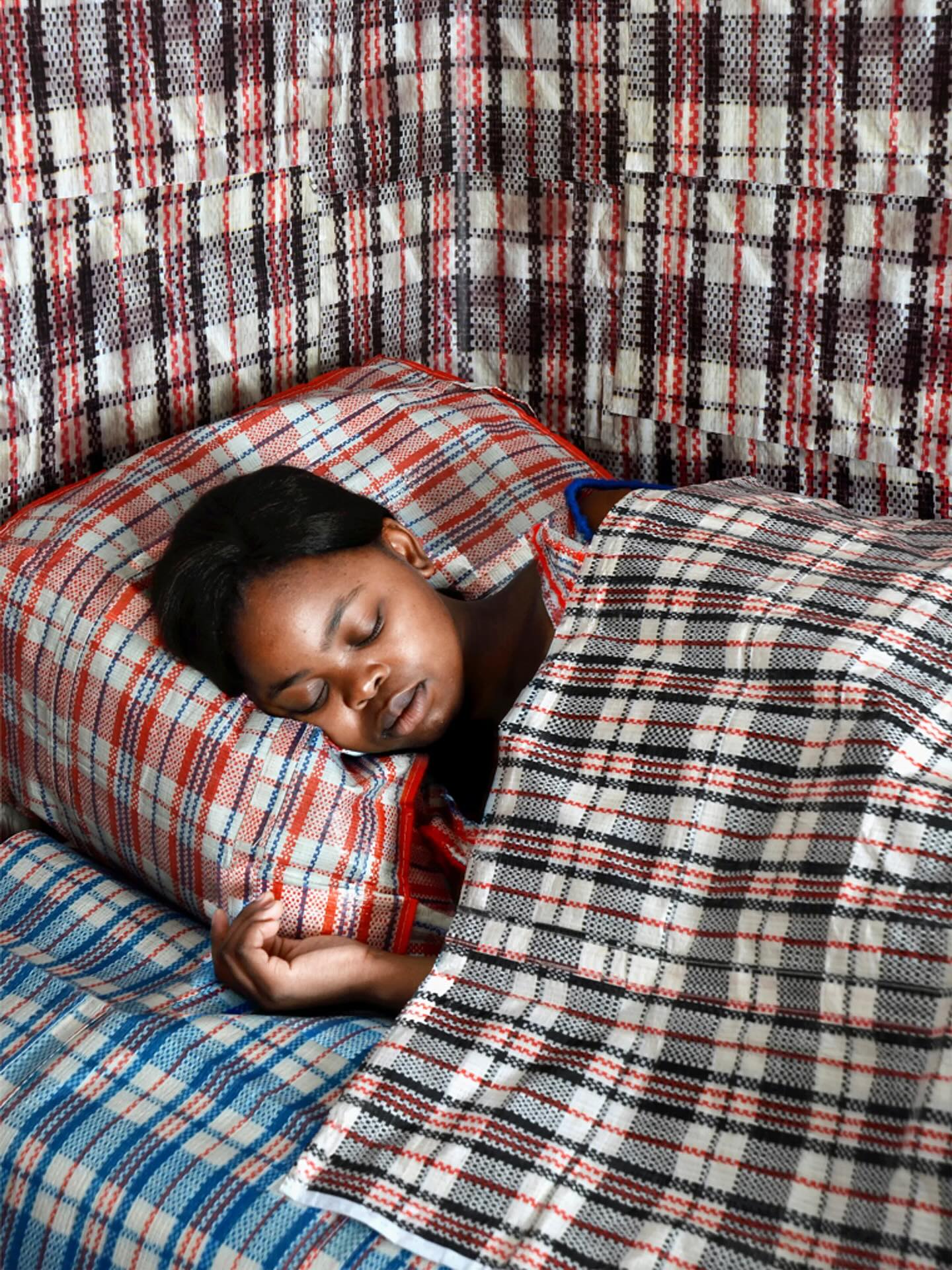
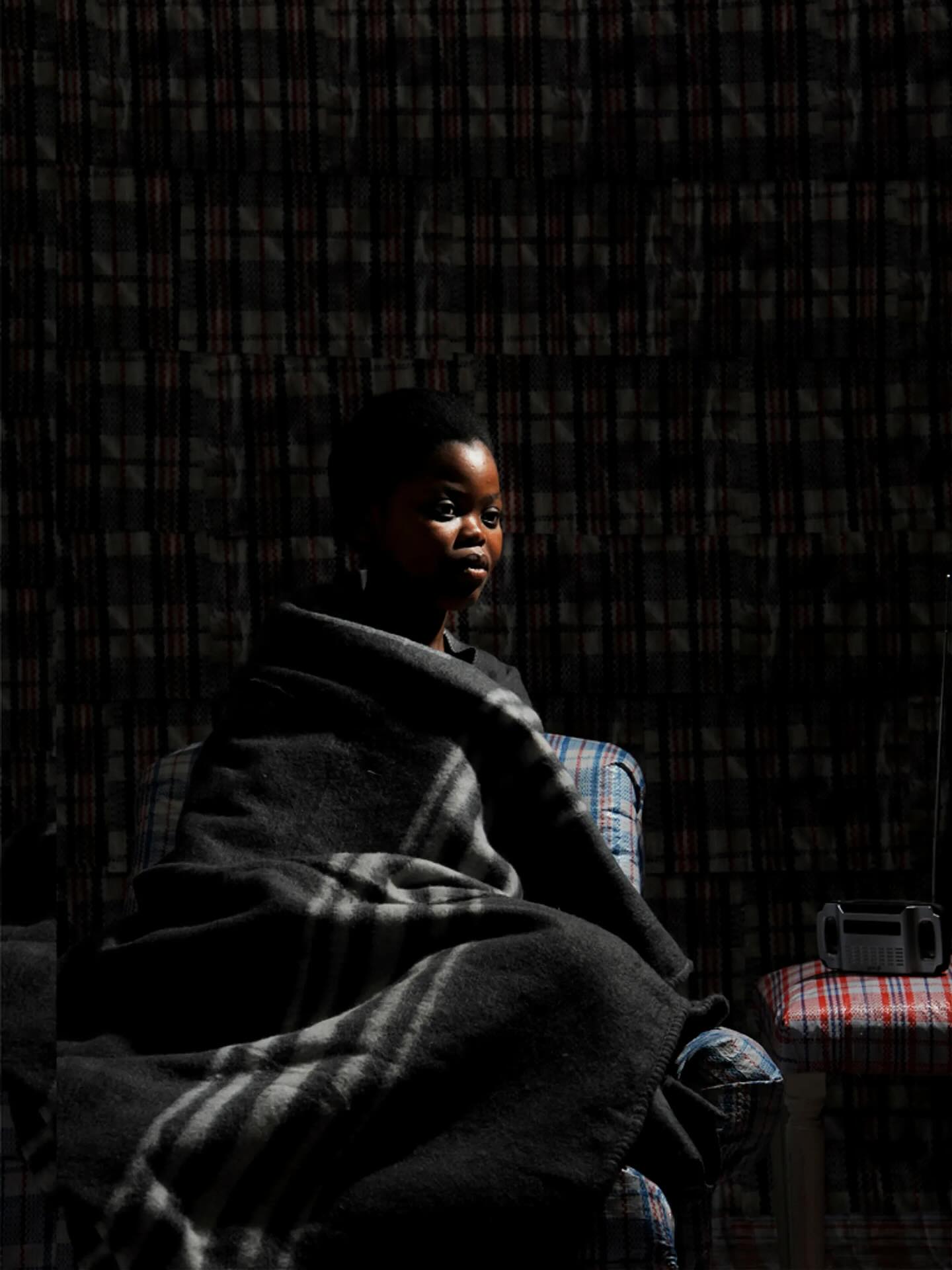
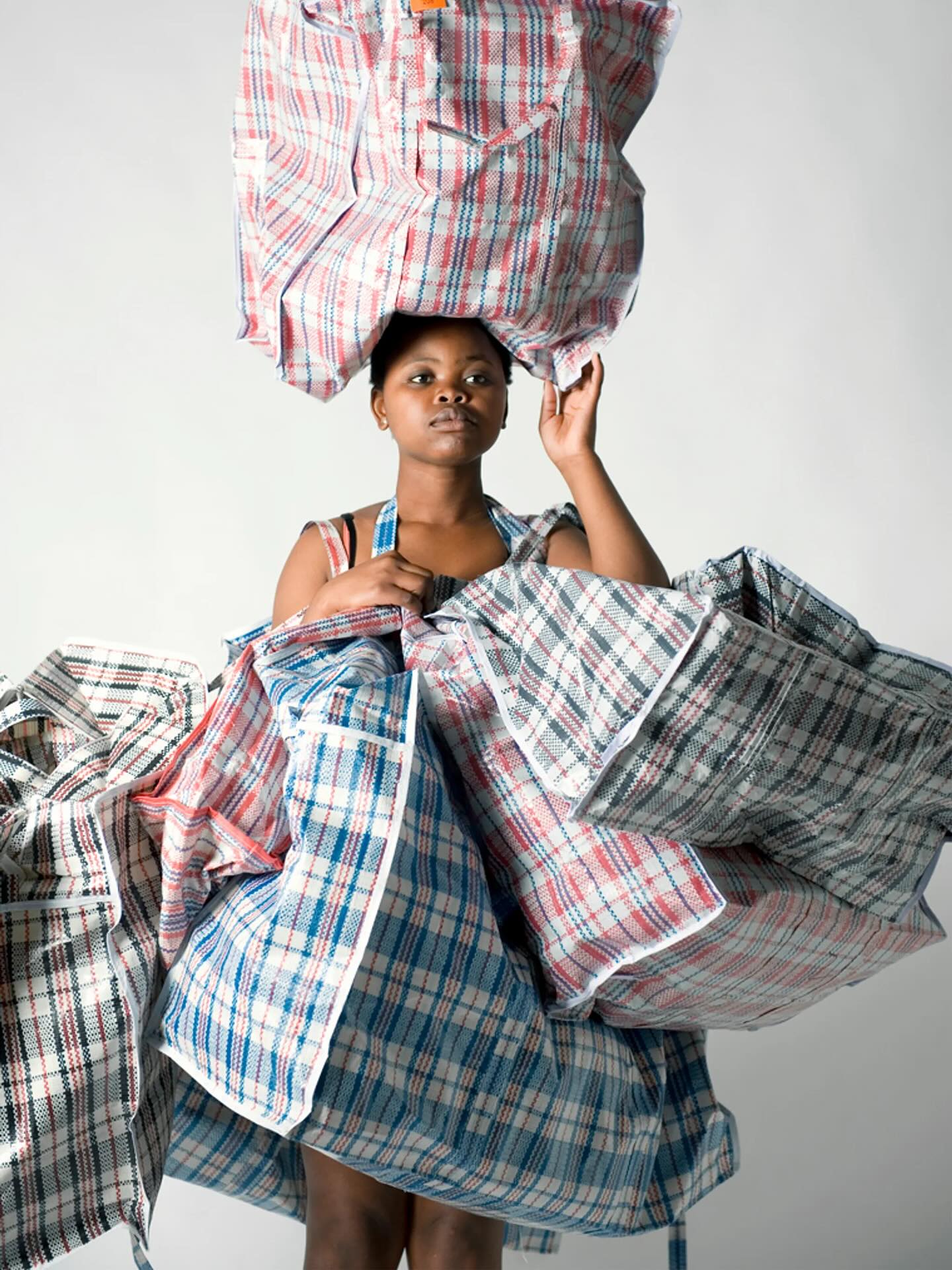
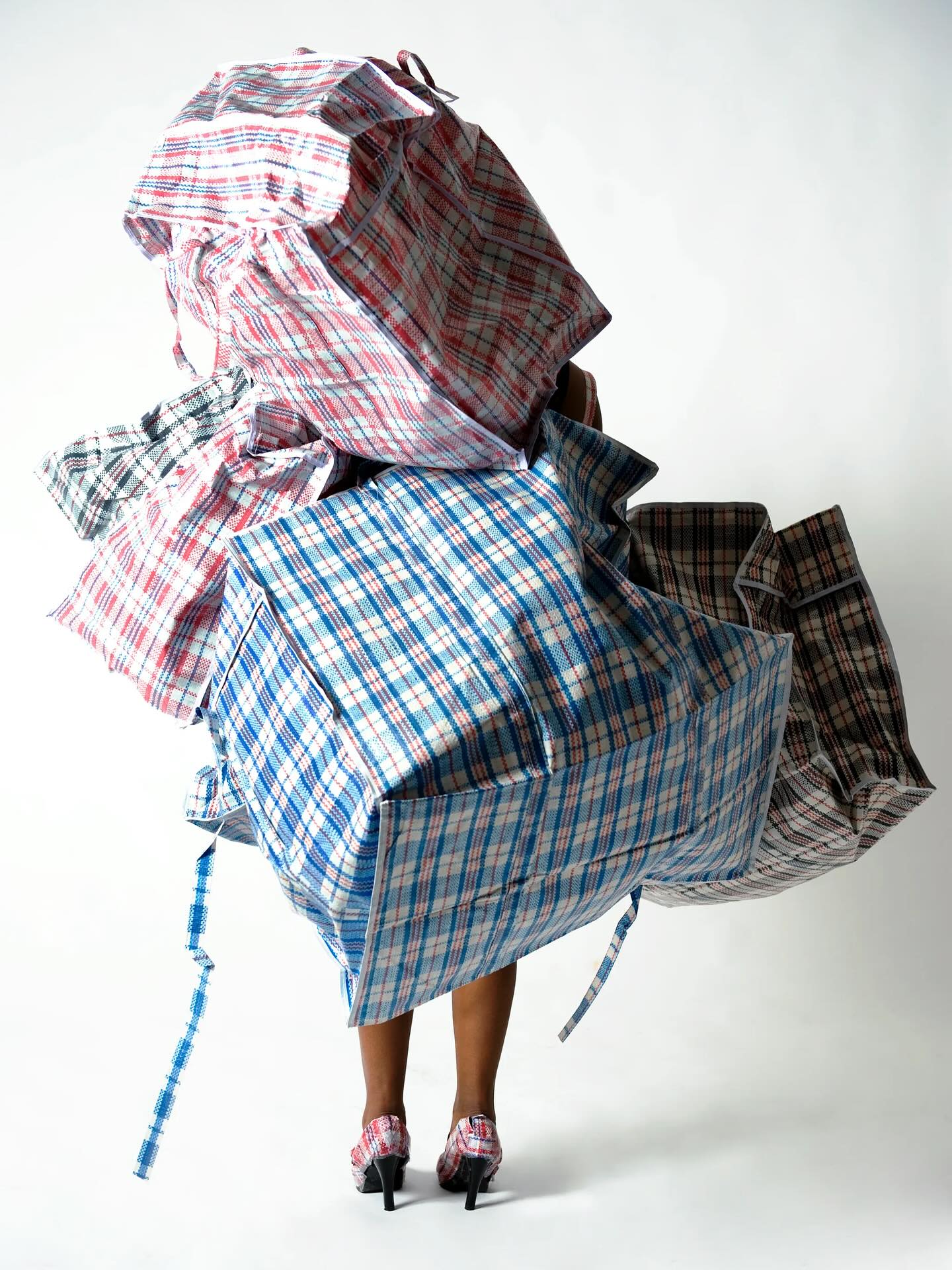
2012년, 노부코 응카바(Nobukho Nqaba)는 가장 흔하고 저렴한 사물을 통해 가장 무거운 주제를 관통한다. ‘우마스켄케테(Umaskhenkethe)’, 혹은 ‘차이나 백’이라 불리는 저 거친 플라스틱 체크무늬는 아프리카 이주민들에게 단순한 가방이 아닌, 생존이자 이동의 유일한 수단이다. 작가는 이 투박한 패턴으로 벽을 도배하고, 옷을 짓고, 마침내 자신의 육체마저 그 속에 은폐시킨다.
작품명 <Umaskhenkethe Likhaya Lam (나의 가방은 나의 집)>이 시사하듯, 이곳에서 ‘이동(Migration)’은 낭만적인 여행이 아니다. 그것은 짐이 곧 집이 되고, 휴대할 수 있는 소유물만이 유일한 정체성이 되어버리는 유랑의 삶이다. 체크무늬 배경 속으로 카멜레온처럼 스며든 인물의 형상은, 고정된 안식처를 잃은 채 짐짝처럼 부유해야만 하는 이주민들의 고단한 초상을 가장 역설적인 방식으로 증명한다.
-
In her seminal 2012 series <Umaskhenkethe Likhaya Lam (My bag is home)>, Nobukho Nqaba transforms a ubiquitous object into a profound symbol of displacement. The woven plastic bag—known locally as ‘Umaskhenkethe’ and universally recognized as the migrant’s vessel—becomes more than a cheap carrier; it acts as the primary texture of survival. Nqaba wraps the domestic interior, her garments, and even her own skin in this coarse, tricolor plaid.
The visual strategy of camouflage is deliberate and striking. By blending seamlessly into the pattern of her baggage, Nqaba illustrates a poignant reality: for the displaced, "home" is no longer a fixed physical location but a precarious, portable concept contained within a plastic zipper. She vanishes into her possessions, suggesting that in a life of constant transit, one’s identity becomes inextricably bound to the burden they carry.
2012년, 노부코 응카바(Nobukho Nqaba)는 가장 흔하고 저렴한 사물을 통해 가장 무거운 주제를 관통한다. ‘우마스켄케테(Umaskhenkethe)’, 혹은 ‘차이나 백’이라 불리는 저 거친 플라스틱 체크무늬는 아프리카 이주민들에게 단순한 가방이 아닌, 생존이자 이동의 유일한 수단이다. 작가는 이 투박한 패턴으로 벽을 도배하고, 옷을 짓고, 마침내 자신의 육체마저 그 속에 은폐시킨다.
작품명 <Umaskhenkethe Likhaya Lam (나의 가방은 나의 집)>이 시사하듯, 이곳에서 ‘이동(Migration)’은 낭만적인 여행이 아니다. 그것은 짐이 곧 집이 되고, 휴대할 수 있는 소유물만이 유일한 정체성이 되어버리는 유랑의 삶이다. 체크무늬 배경 속으로 카멜레온처럼 스며든 인물의 형상은, 고정된 안식처를 잃은 채 짐짝처럼 부유해야만 하는 이주민들의 고단한 초상을 가장 역설적인 방식으로 증명한다.
-
In her seminal 2012 series <Umaskhenkethe Likhaya Lam (My bag is home)>, Nobukho Nqaba transforms a ubiquitous object into a profound symbol of displacement. The woven plastic bag—known locally as ‘Umaskhenkethe’ and universally recognized as the migrant’s vessel—becomes more than a cheap carrier; it acts as the primary texture of survival. Nqaba wraps the domestic interior, her garments, and even her own skin in this coarse, tricolor plaid.
The visual strategy of camouflage is deliberate and striking. By blending seamlessly into the pattern of her baggage, Nqaba illustrates a poignant reality: for the displaced, "home" is no longer a fixed physical location but a precarious, portable concept contained within a plastic zipper. She vanishes into her possessions, suggesting that in a life of constant transit, one’s identity becomes inextricably bound to the burden they carry.